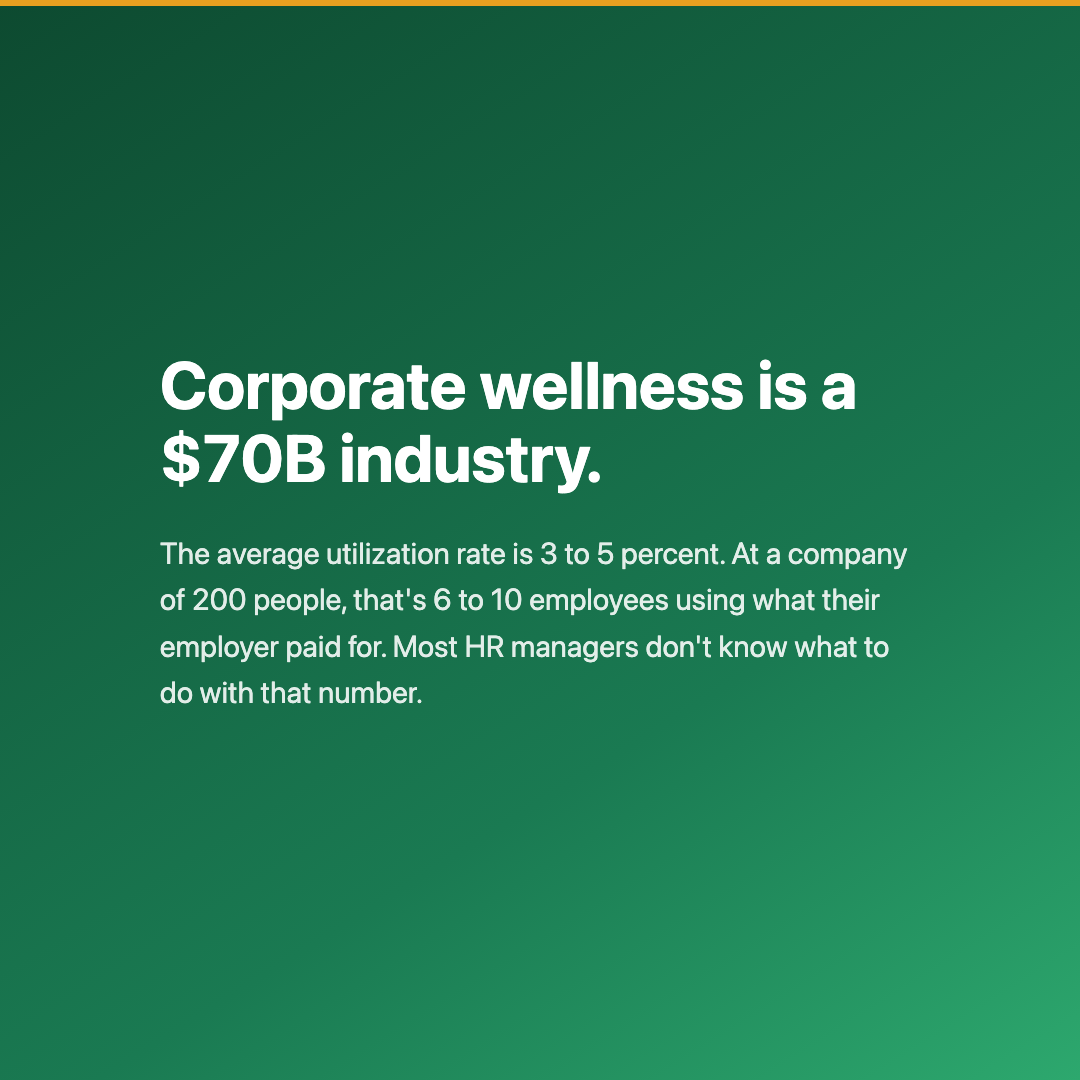
Corporate wellness is a $70 billion industry. The average utilization rate is 3 to 5%. Most employees do not know their benefits exist. Most employers do not know why no one is using them.
That gap between investment and impact is not a minor inefficiency. It is a structural failure, and understanding why it exists reveals a significant opportunity for independent wellness practitioners who are willing to meet employees where the corporate programs are not.
Why Corporate Wellness Underperforms
The first and most common reason is awareness. Corporate wellness benefits are typically buried in benefits portals that employees visit once during onboarding, then never again. They are listed in the same place as dental plan details and 401k enrollment instructions. There is no friction-free path from "I am stressed" to "here is the thing my company offers." The cognitive distance between need and resource is simply too large.
The second reason is relevance. Most corporate wellness programs are designed for a generic employee, which means they are designed for no one in particular. A step-tracking challenge, a meditation app subscription, and an annual biometric screening do not address the specific circumstances of a 42-year-old sales manager managing a team through a restructuring, or a warehouse worker dealing with chronic lower back pain. Generic programming does not feel like support. It feels like a checkbox.
The third reason is trust. Employees are not always confident that what they share through a company-sponsored wellness program stays private. Whether or not that concern is technically accurate, the perception is enough to keep people from engaging honestly, or at all. A wellness tool connected to an employer carries a different psychological weight than one a person chooses for themselves.
The fourth reason is incentive design. Many corporate wellness programs reward participation in activities (completing a health assessment, attending a webinar) rather than meaningful behavior change. The incentives draw people in once, without building a habit. The numbers look better in a quarterly report, but nothing actually shifts.
What the Data Reflects
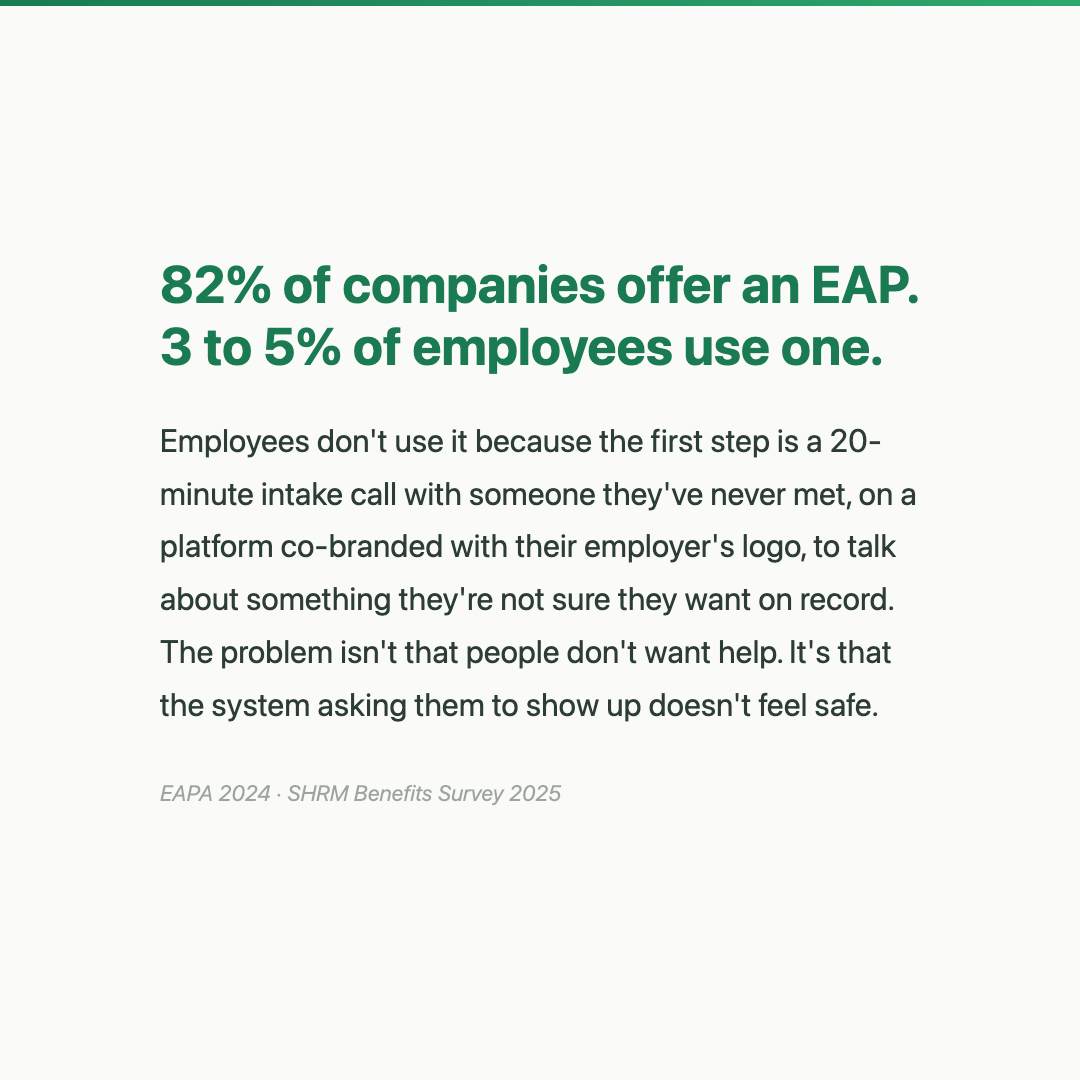
A 3 to 5% utilization rate across a $70 billion market means the overwhelming majority of employees eligible for some form of wellness support are not accessing it. This is not because the need is not there. Mental health claims, chronic disease prevalence, and absenteeism data all point in the same direction: the need is significant and growing. The benefits exist. The uptake does not.
For employers, this represents a poor return on a real investment. For employees, it means access to support that is technically available to them but practically invisible. For the wellness industry as a whole, it is evidence that designing a program is not the same as delivering one.
What This Means for Independent Practitioners
Independent wellness practitioners have a structural advantage that corporate programs do not: they are chosen. A person who books a session with an independent coach has made an active decision to seek support. That act of choosing creates engagement, accountability, and trust in a way that a passive benefit never will.
The opportunity here is twofold. First, practitioners who understand the corporate wellness landscape can position themselves as a complement to or replacement for programs that employees are not using. Employers are increasingly open to flexible wellness spending accounts and stipends that allow employees to choose their own providers, precisely because the fixed-program model has not delivered.
Second, practitioners who can articulate outcomes in the language that HR and benefits teams understand (reduced absenteeism, improved focus, lower stress-related claims) are positioned to build direct relationships with organizations looking for what their standard programs have failed to provide.
The $70 billion is not going away. But it is increasingly looking for a better path to the people it is meant to serve. That is a conversation worth being part of.
Want to spend less time on admin?
Healthy Dynamics builds the AI client-communication CRM for wellness, training, and nutrition practitioners. Founding members lock in $29/month for life.
Find Your Dynamic →